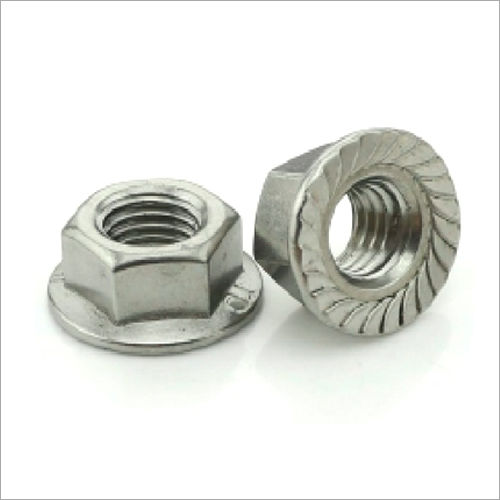
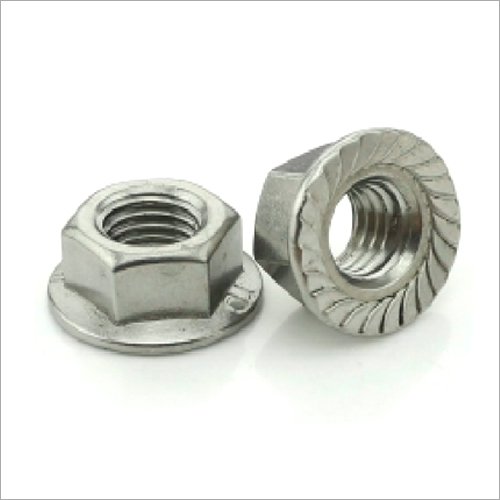
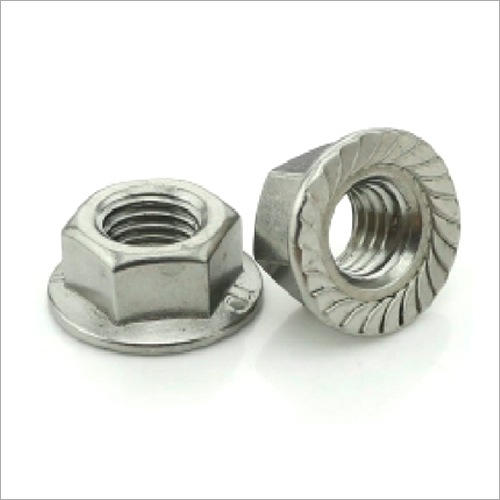
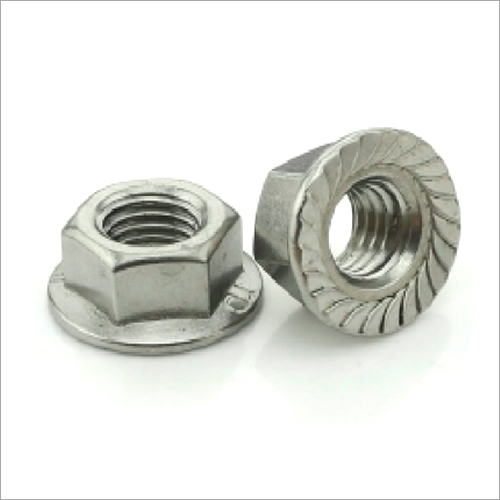
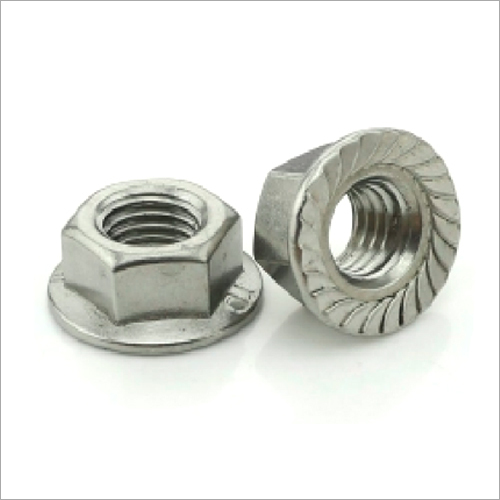
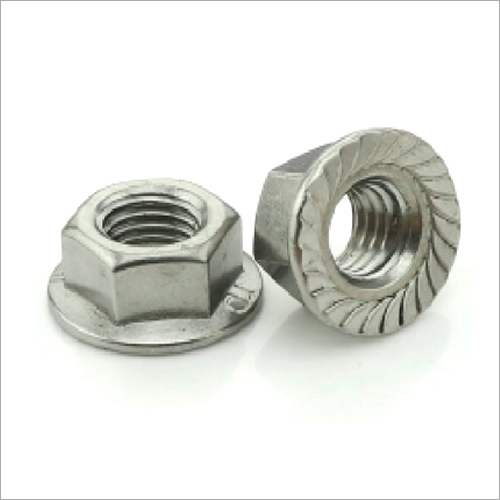
Stainless steel flange nuts are high-strength, corrosion-resistant fasteners featuring an integrated, wide washer-like base that distributes pressure, reduces surface damage, and prevents loosening. Often featuring serrations for a locking action, they are commonly used in automotive, construction, and machinery applications to replace separate nut-washer combinations.
Key Features and Description
Integrated Washer: The wide flange eliminates the need for a separate washer, spreading the load across a larger area to prevent surface damage.
Material: Primarily constructed from durable stainless steel grades such as 304, 316, and 18-8, offering high corrosion resistance for challenging, wet, or chemical environments.
Serrated Type: Often, the bottom surface features serrations that grip the material, acting as a lock to prevent loosening due to vibration.
Shapes: Most commonly hexagonal, though 12-point designs exist for high-torque requirements.
Standards: Comply with various standards, including DIN 6923, JIS B1190, and ISO 4161.
Common Applications
Automotive & Machinery: Engine manifolds, exhaust systems, and general assembly where vibration is a factor.
Construction & Industrial: Used with oversized or irregular holes due to the large bearing surface.
Marine & Food Processing: Environments requiring high corrosion resistance.
Specifications
Sizes: Metric ranging from M4 to M100, including common M8 or M10 sizes.
Thread Types: Available in coarse and fine threads (UNC, UNF, UNEF).
Types: Standard hex flange, serrated flange, and flange lock nuts.
Engineered for Reliability
These stainless steel flange nuts are crafted for robust performance in industrial sectors such as automotive, machinery, construction, and electrical assemblies. The use of A2 or A4 stainless steel provides outstanding durability, high hardness, and excellent resistance to corrosion, even in harsh conditions.
Innovative Radial Serrations
Radial serrations on the flange are designed to actively prevent the nut from loosening under vibration, making them particularly useful for dynamic applications. The larger flange diameter improves load distribution and eliminates the need for separate washers, ensuring safer and more stable joints.
Versatile and Customizable
Manufactured in India to DIN 6923 standards or international equivalents, these nuts accommodate a range of thread sizes (most commonly M6-M20), and can be tailored to specific industrial requirements. The polished, self-finished surface enhances both appearance and longevity, fitting seamlessly into diverse usage scenarios.
FAQ's of Stainless Steel Flange Nuts:
Q: How do radial serrated stainless steel flange nuts prevent loosening?
A: The radial serrations on the flange grip the mating surface, creating increased friction that resists loosening due to vibrations or torque, making these nuts ideal for automotive and machinery applications where vibration is common.
Q: What benefits does A2/A4 stainless steel provide for flange nuts?
A: A2 or A4 stainless steel offers excellent corrosion resistance, high hardness (95 HRB), and durability. This makes the nuts suitable for harsh environments and high-temperature applications up to 800C, depending on the stainless steel grade.
Q: When should I use a flange nut instead of a standard hex nut?
A: Flange nuts are preferred when you need a wider bearing surface to distribute load, eliminate the need for washers, or require enhanced resistance to loosening due to their serrated flange. They are especially effective in industrial and high-vibration environments.
Q: Where are these stainless steel flange nuts typically applied?
A: They are widely used in the automotive sector, machinery assemblies, construction projects, and electrical installations, thanks to their robustness and ability to prevent loosening in dynamic conditions.
Q: What is the manufacturing process for these nuts?
A: The nuts are produced using precision cold or hot forging, followed by machining and application of a radial serrated flange. The final steps include polishing for a smooth, self-finished surface and stringent quality checks to meet DIN 6923 or equivalent standards.
Q: How can I specify the correct size and grade for my application?
A: Determine the thread size (e.g., M6-M20), material grade (A2 for general use, A4 for marine or chemical exposure), and any custom requirements. Consult your supplier or manufacturer in India for tailor-made solutions.
Tell us about your requirement
Price:
Quantity
Select Unit
50
100
200
250
500
1000+
Additional detail
Mobile number
Email
Name
Comapny Name
Phone Number
Email Id
City / State
Confirm Your Requirement
Verification Code
Did not receive yet?
Resend OTP
You’re Done!
We have received your requirements and will reply shortly with the best price.






 Send Inquiry



 Send Inquiry
 Send Inquiry
 Send SMS